FÜRCHTE DICH NICHT
PASCAL WILD
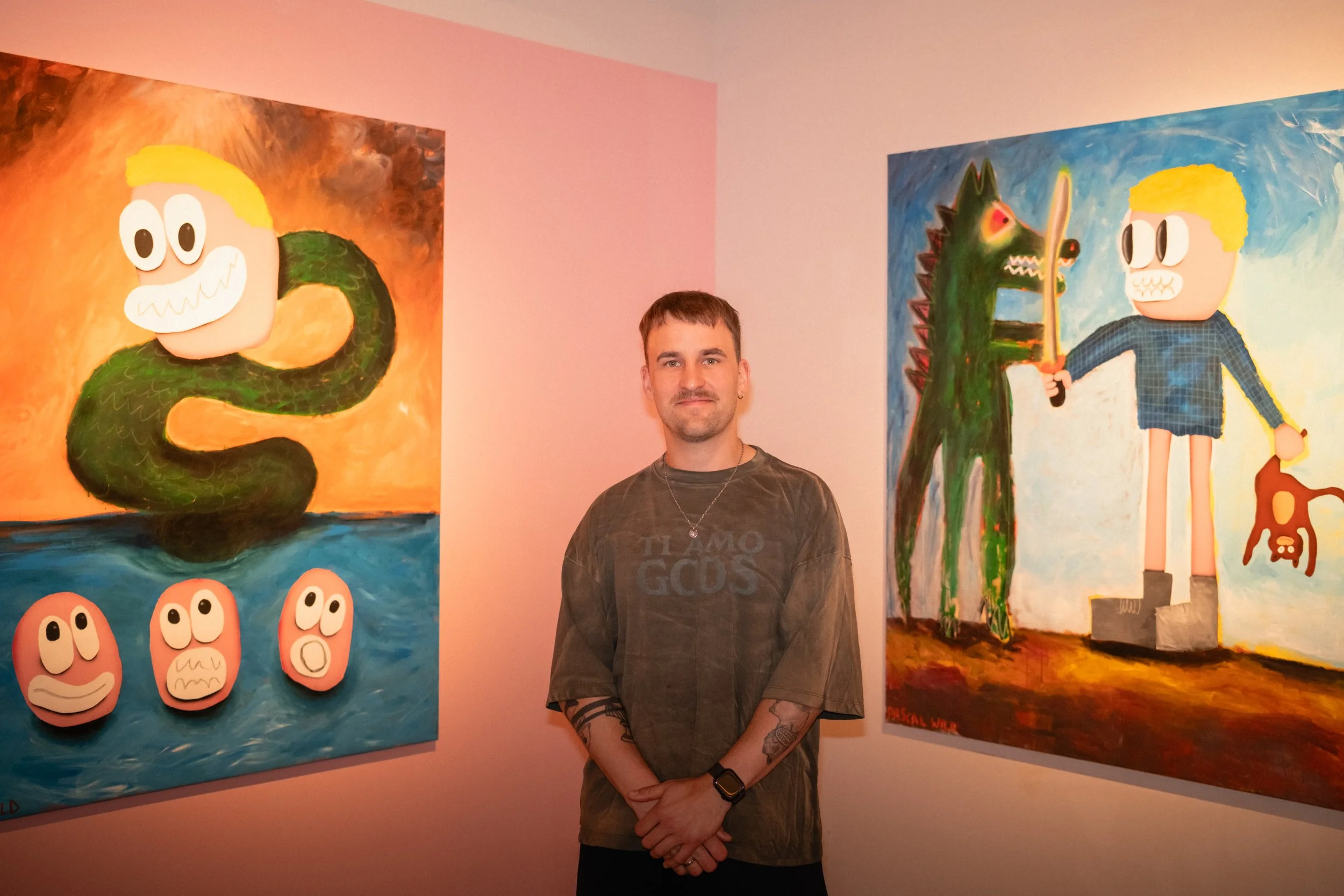
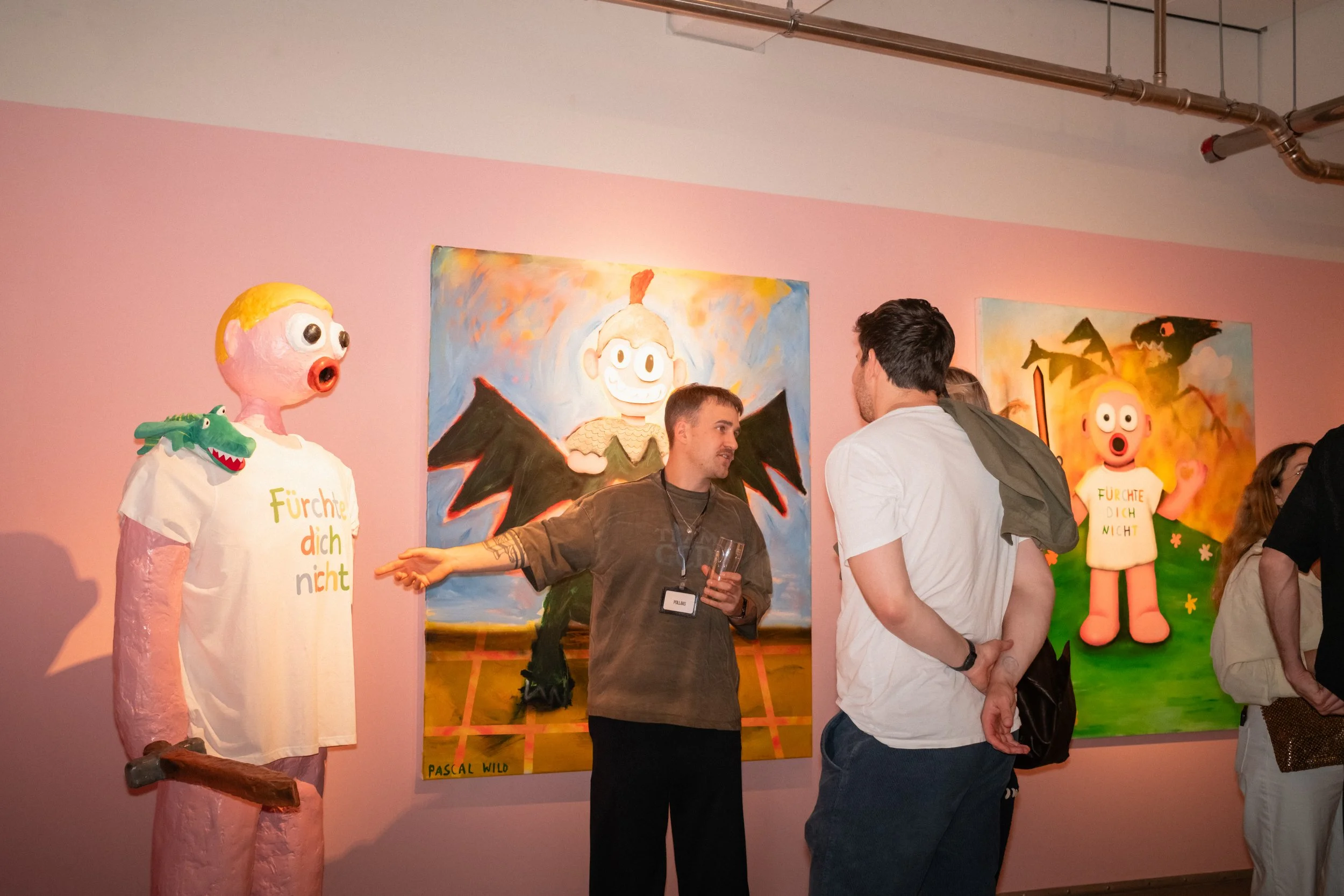
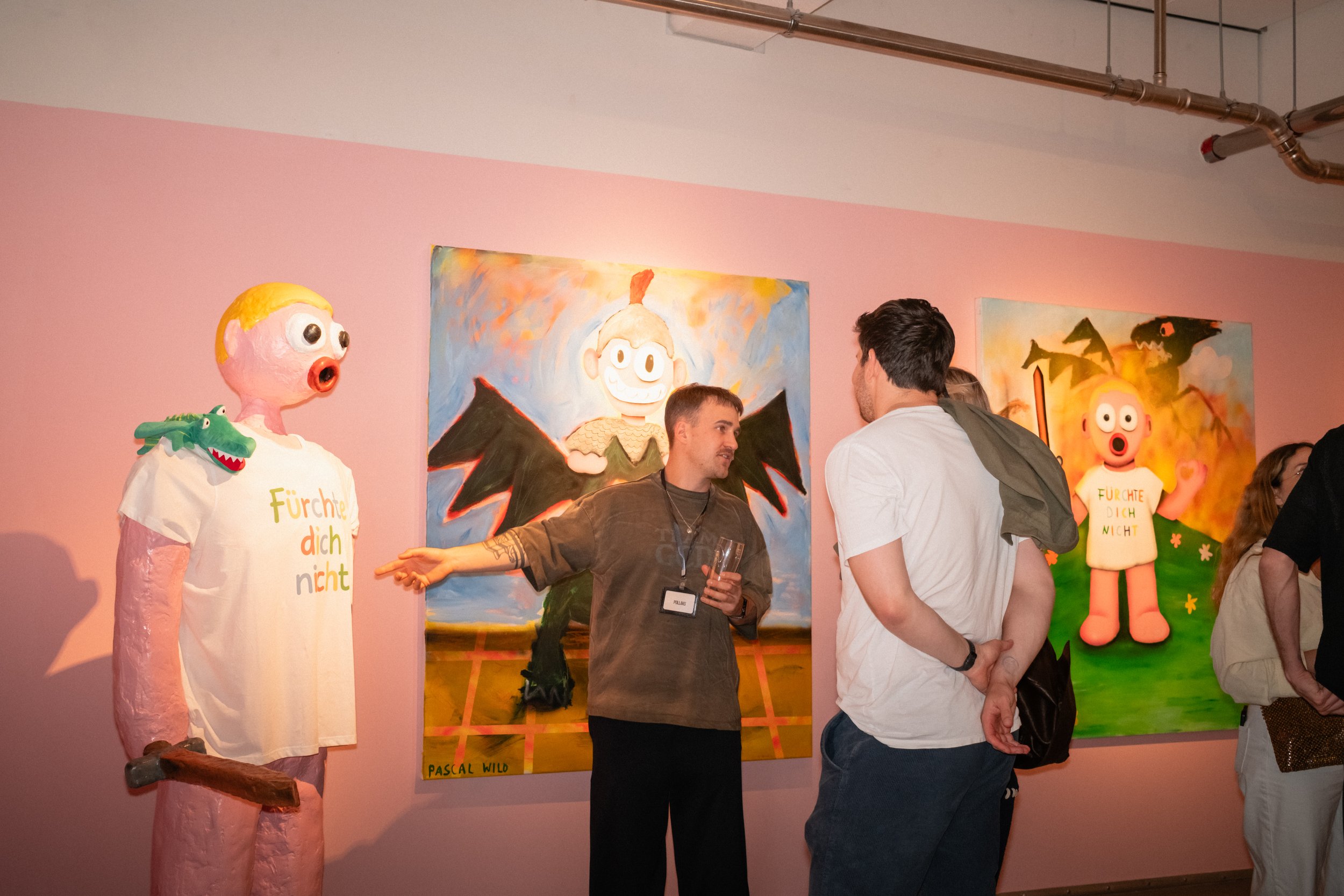
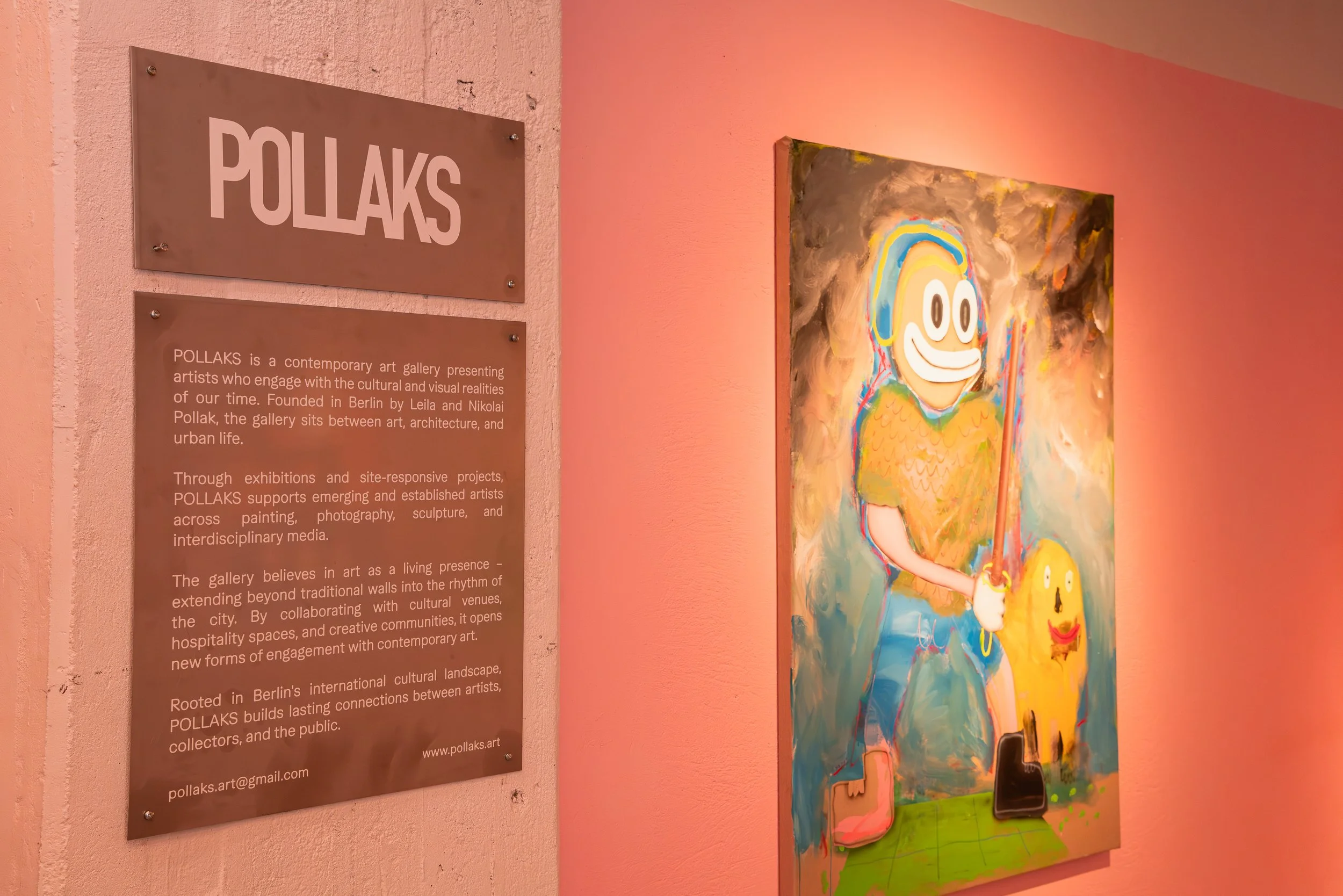
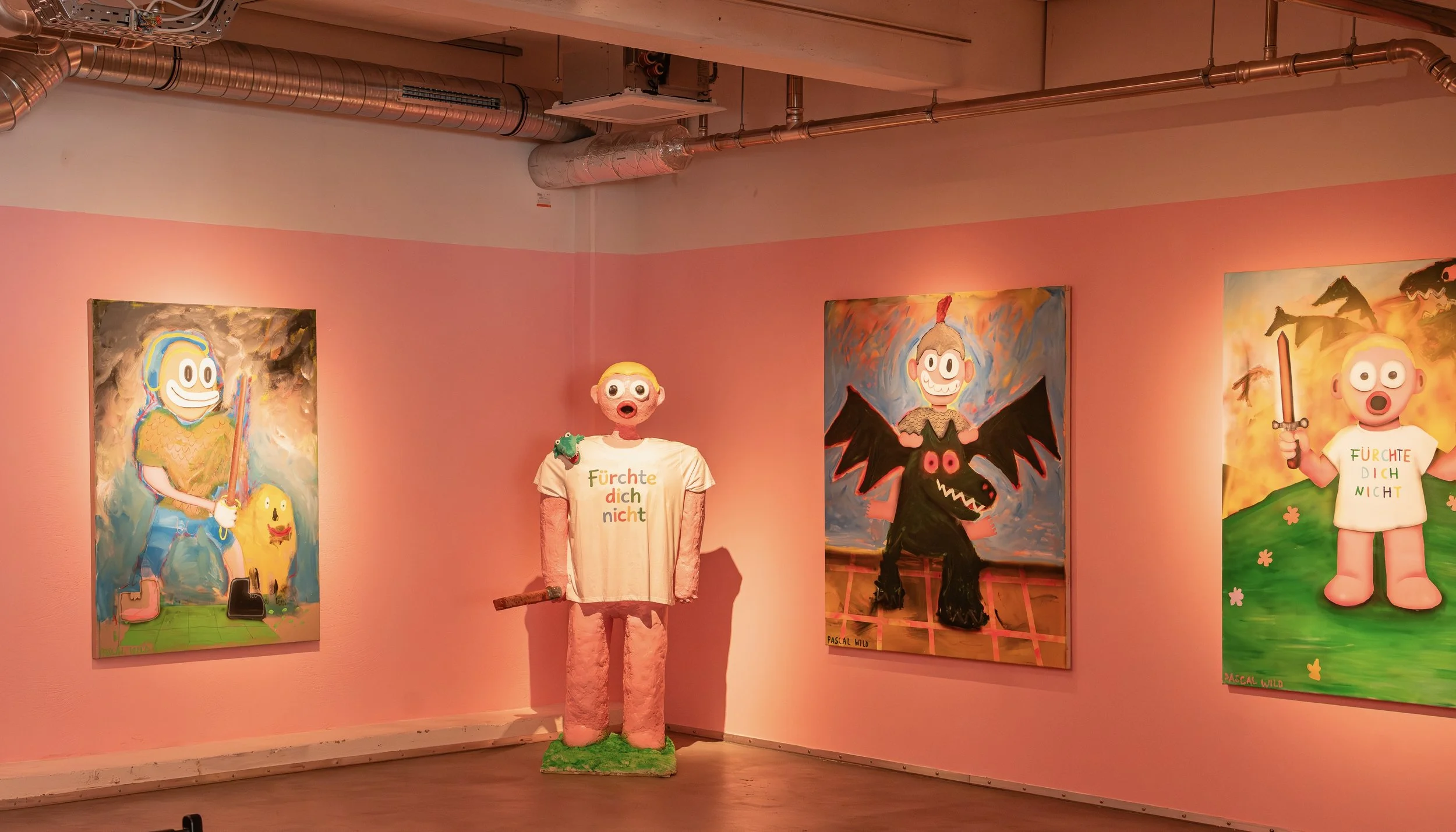
Pascal Wild’s paintings are inhabited by figures that seem to move through states of emotional overload while insisting on staying open, playful and vulnerable. They smile, pose, carry swords, animals or symbols of strength, yet beneath their exaggerated gestures and cartoon-like appearances lies a constant instability. The characters appear caught between courage and collapse, humour and fear, performance and self-protection.
The title Fürchte dich nicht (“Do not be afraid”) functions less as reassurance than as a fragile inner monologue. It is the sentence one repeats in moments where control already begins to dissolve. Wild’s protagonists seem aware of the absurdity and intensity surrounding them, but continue anyway. They persist through fantasy, exaggeration and emotional projection.
A central tension within the works lies in the contrast between clarity and painterly collapse. Faces, eyes, shoes or gestures remain sharply defined and almost sign-like, while other parts of the paintings dissolve into raw marks, unstable spaces and fragmented surfaces. Through this friction, the works resist both narrative coherence and ironic distance. Instead, they create emotional situations that feel immediate, exposed and unresolved.
Wild’s paintings do not depict fantasy worlds in the traditional sense. Rather, they construct psychological spaces in which emotional contradictions coexist: innocence and excess, tenderness and threat, false heroism and quiet desperation. The figures continue performing stability while their environments slowly lose structure.
In Fürchte dich nicht, humour is never used to ridicule vulnerability. It becomes a strategy of survival.